In this article
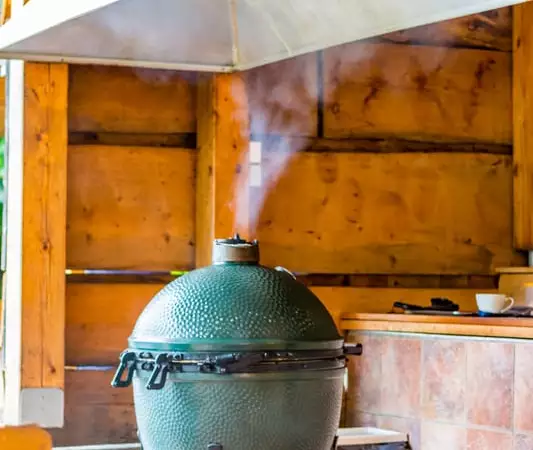
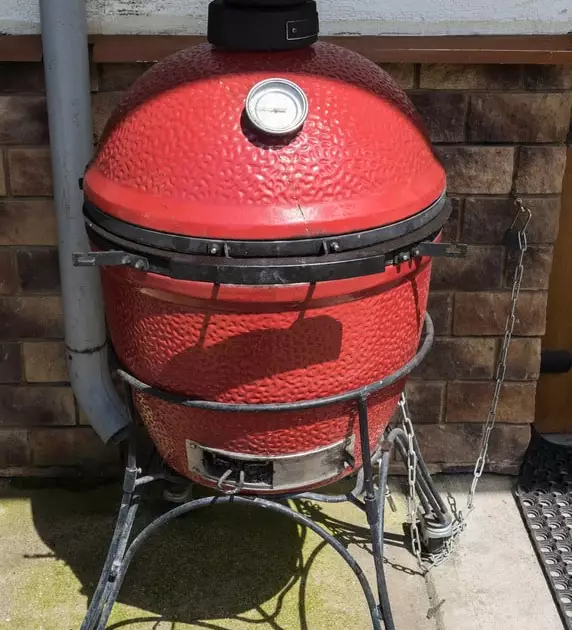
Using a kamado grill comes down to two things a kettle grill never asks of you. Burn lump charcoal only and never lighter fluid, because ceramic is porous and it will absorb the chemicals and hand them back to your food. And burp the grill every time you open it: crack the lid a few inches, hold it there for a few seconds, then open it fully. Beyond that, it is the same routine as any charcoal grill. Light the coals, set the vents, wait for the temperature, cook.
The rest of this guide is the detail: which starters to use, where to set the vents for a given temperature, how long a kamado takes to get there, and how to shut it down without cracking the ceramic.
Lump charcoal, and nothing else
Ceramic is far more porous than the steel a kettle grill is made from. Anything you burn inside it soaks into the walls. Lighter fluid, quick-light briquettes and chemical fire starters all leave a strange taste behind in whatever you cook.
Briquettes are worth avoiding for a second reason even when they are labeled all-natural: they produce a lot of ash, and ash chokes the bottom vent on a kamado, which is the exact thing you rely on to control the temperature. Lump charcoal leaves much less behind.
Lump costs more per bag, but a kamado is so well insulated that one load lasts an unusually long time. You will not go through it the way you would in a kettle.
Chimney starter
A chimney is the simplest way to get lump charcoal going. They cost very little and will outlast most of the grill. Light it with newspaper or a natural fire starter.
a Weber Rapidfire chimney starterElectric starter
An electric starter plugs into a wall outlet. You bury the element in the coals, wait a few minutes for the charcoal around it to catch, and pull it out. Nothing to buy repeatedly, nothing to taste.
Natural fire starters
If you are used to chemical starter cubes, natural wax-and-sawdust starters do the same job without the aftertaste. These are the ones to keep in the bag with a kamado.
Stanbroil natural fire startersBurping, and why it matters
A kamado holds heat like nothing else, which means that when you open a hot one, a rush of oxygen meets coals that have been starved of it. The result is a flashback: heat, and sometimes actual flame, coming straight up out of the grill at your face.
Burping prevents it. Lift the lid two or three inches, hold, let a little air in, then open it the rest of the way. Some owners do it two or three times, cracking and closing before opening fully. Your manual should say what the maker recommends for your model.
Do it every single time, whatever the thermometer says. The point is to make it muscle memory, so that on the one occasion when the grill is much hotter than you assumed, you have already done the safe thing without deciding to.
A few other things worth setting as habits:
- Teach the kids to stay away from it, or if they are helping, teach them to burp it before opening.
- Keep pets clear. The outside of a kamado gets hot to the touch, not just the inside.
- Never move a kamado while it is in use or cooling down, and remember that cooling down takes a long time.
- Never use one indoors or on a surface that is not fireproof. Wood decking and plastic are out. If your model is a standalone without a stand, it wants stone or rock underneath.
- Get heavy-duty gloves. You will need them any time you move a ceramic deflector plate or a grate while the grill is hot, which is often.
The first burn
Manufacturers disagree on this. Some want an initial low burn to set the adhesive between the lid gasket and the ceramic. Kamado Joe says a break-in burn is not necessary at all. Check your manual before you decide, because if yours calls for a low first burn, you should not be running it hot on day one.
Where you are free to choose, a burn with no food on it is worth doing anyway if you have never used a kamado. Start low for an hour, then open the dampers gradually and watch what the temperature does. Finish by opening them all the way to see how hot it will actually go, which on most kamados means a thermometer reading north of 700 degrees. Doing that with nothing on the grill teaches you the controls at zero risk to dinner.
Vents and temperature
Both vents open wide while the charcoal catches. Closing them early strangles the airflow and the grill takes far longer to come up than it needs to.
Once you are within 15 to 20 degrees of the temperature you want, start adjusting. As a starting reference on most kamados:
- Vents wide open: climbing toward 700 degrees.
- Vents around half open: roughly 300 to 350 degrees.
- Both vents nearly closed: the low and slow range, for smoking and long cooks.
Those are starting points, not settings. Every kamado has its own sweet spots and you find them by watching the thermometer for the first few cooks. The underlying principle is the same one that governs vents on any charcoal grill: more air, more heat.
Cooking on it
Direct heat
Straightforward. How much charcoal you load depends on how much you are cooking and for how long, the same as on any charcoal grill. Just keep the temperature range in mind, because a kamado will run away from you far more easily than a kettle will.
Two zones
Two-zone cooking is awkward on a smaller kamado, since there is not much grate to divide. The usual answer is a ceramic heat deflector plate that sits across half the grill, giving you an indirect side without having to rake coals around.
a ceramic heat deflector plateLow and slow, and smoking
This is what kamados are best at. Either start with a small amount of charcoal and add as you go, or build a mound and let it burn slowly downward from the top.
Close both vents almost all the way. Watch the thermometer closely the first few times and adjust in small increments. Put a deflector or smoking stone over the coals, and add wood chips in with the charcoal for smoke.
Done properly, a kamado will hold a low temperature for over 12 hours on a single load of charcoal, which is the thing that makes people evangelical about them. There is more on this in our guide to whether kamado grills are good for smoking.
High heat

At the top of the range you can cook pizza, bake bread, or use it like a dutch oven. Most of those need an accessory, a pizza stone in particular, which may or may not have come with your grill.
For high-temperature cooking, load plenty of charcoal, leave both vents wide open, and allow 60 to 90 minutes for the grill to come up. That is much longer than a kettle needs, and it catches people out. All that ceramic mass has to heat through before the cooking surface is stable.
Shutting it down
Close both vents to cut off the oxygen. Then wait.
Never pour water on the coals. The sudden temperature change can crack or break the ceramic. Water is a bad idea on any grill and a genuinely expensive one here.
Expect 24 to 48 hours before the whole thing is cool. Slow cooling is the price of the insulation that makes a kamado worth owning in the first place, and if you are still weighing that trade, we go through it in are kamado grills worth it.
Brush the cooking grate while it is still warm, before you close the vents, the way you would on any grill. Cold grates are much harder work, and our guide to cleaning grill grates covers what to do when you have left it too long.