In this article
To keep a metal swing set from rusting, buy galvanized or aluminum tubing if you can, prime and repaint any bare or scratched metal with a rust-inhibiting outdoor paint, wipe dirt and mud off the frame so moisture can’t sit against the steel, and put oil on bolt threads before you assemble the set. If rust has already started, sand it back to bare metal or dissolve it with a rust remover, then prime and paint the spot right away. Rust spreads, and it won’t stop on its own.
Why metal swing sets rust in the first place
Most metal swing sets are steel, which is an iron alloy. Put iron together with oxygen and water and you get iron oxidation. The metal corrodes and turns into rust. That reaction doesn’t reverse, so there is no product that turns rust back into steel. All you can do is take the rust off and stop the next patch from forming.
Rust also spreads. Once it has a foothold in one spot it eats outward into the metal around it, which is why a single orange freckle on a leg is worth dealing with the weekend you notice it rather than next spring.
Better sets use galvanized steel, which is steel coated in a layer of zinc that keeps water and air off the steel underneath. Galvanized steel will rust eventually, but it takes far longer than bare steel. Some frames also carry a vinyl shell over the metal, which helps for the same reason.

Four ways to prevent rust
Buy a rust-resistant set to begin with
The cheapest rust prevention is the one you pay for at purchase. Look for galvanized steel or aluminum alloy, and check whether the coating is on the inside of the tubing as well as the outside. A lot of sets only coat the outside, which means water that gets inside a leg through an open end or a bolt hole is working on bare steel where you can’t see it. Rust-resistant chains and hardware matter too, since the hardware usually goes before the frame does.
You pay more for that, and it is worth it if you plan to keep the set for a decade. If you are still deciding between materials, I went through the trade-offs in wood vs metal swing sets.
Prime and paint it
If you bought a cheaper set that isn’t made from rust-resistant material, you can add the protection yourself. Repainting every year or so is a reasonable maintenance habit even on a good set.
Start with a rust-resistant metal primer, or use an all-in-one paint and primer. Whatever you pick, make sure it is non-lead-based, rated for outdoor use, and says on the can that it inhibits corrosion. Two coats, applied the way the label tells you to, is better than one.
People sometimes suggest painting the nuts and bolts before assembly. I would skip that. Paint in the threads makes the hardware hard or impossible to drive, and most of it gets scraped off going in anyway. Put WD-40 or another anti-corrosion oil on the threads instead, install the hardware, then paint the exposed heads once the set is standing.
Keep it clean
This one costs nothing. Mud and dirt left on the frame hold water against the metal and stop it drying out after rain, which speeds up corrosion considerably. Wiping the frame down now and then, especially the horizontal top rail and the feet where dirt collects, buys you real time.
Keep the rain off it, if that is practical
Putting the set under an awning or a shade tree keeps rain and snow off. It does nothing about humidity, and honestly it is often more trouble than it is worth. Ready-made canopies that fit a specific swing set are hard to find unless the set came with one, and rigging a yard canopy over a swing set is a project. Tarping it before every storm gets old fast.
If you live somewhere genuinely wet, it is worth the effort. If you get a normal amount of rain and the set is galvanized or well painted, your kids will likely outgrow it before rust becomes a problem. A shade cover has a second benefit anyway, which is that bare metal in full sun gets hot enough to be unpleasant on small hands.
How long a metal swing set should last
A well-made metal swing set, installed properly and looked after, generally lasts around 15 to 20 years. The industrial sets at public parks often run 30 years, but those are built to a different standard than anything sold for a backyard. Price tracks lifespan fairly closely here, so a very cheap set is unlikely to give you 20 years no matter how carefully you paint it.
Three things shift that number:
- Gauge of the metal. Heavier gauge steel lasts longer and dents less.
- Climate. Frequent rain and snow wear a set down faster than a dry or temperate climate does.
- Load. A set rated for ages 2 to 5 that gets used by older, heavier kids won’t reach its rated life.
Before you buy, read the warranty. It is the manufacturer’s own estimate of how long the thing lasts, and a long comprehensive warranty is a better signal than any marketing copy on the box. It also pays to anchor the set properly, because an unanchored frame rocks, and rocking loosens hardware, and loose hardware lets water into the joints.
Can you still use a rusty swing set?
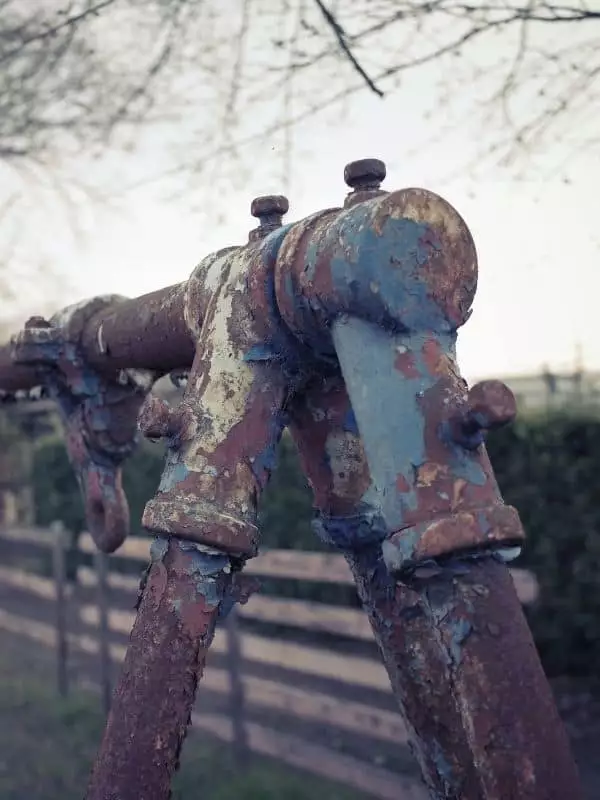
No. Keep the kids off it until the rust is dealt with. Rust eats metal and leaves what is left brittle, and a rusted bolt, carabiner, chain link or frame section can fail under load with a child on it.
A few orange chain links or a couple of small patches on a leg don’t look like much, and often they aren’t. The problem is that you can’t tell how deep the corrosion goes until you start taking it off. Play it safe and treat it first.
Fixing a set that has already rusted
If the frame isn’t full of holes and the rust is in patches rather than everywhere, you can usually save it. There are three approaches.
Sanding or scraping
Take the rust off mechanically with steel wool, a wire brush (by hand or as a drill attachment), sandpaper, or an electric sander. It is the most tiring option and it works well. Paint the spot soon after, because the gouges and scratches you leave behind are more vulnerable to rust than the surface was before you started.
Chemical rust remover
Rust removers are liquids that dissolve or break down rust on contact. Evapo-Rust, Rust-Oleum Rust Dissolver and WD-40 Rust Remover are three of them. You apply the product, wait, then scrub off the residue with a wire brush. If you would rather not put harsh chemicals on equipment your kids climb on, you can make a rust remover from household products. The homemade versions are slower but they work, particularly with some scrubbing behind them.
Rust converter
Converters don’t remove rust. They trigger a reaction that turns it into an inert layer that seals the surface and stops further corrosion, after which you clean and paint over it. The catch is that they are designed for heavy rust with little bare metal around it, so for a few small patches on a swing set frame they are usually the wrong tool.
Whichever method you use, once the area is clean and dry (or cured, for a converter), prime and paint it as described above. The paint is the part that actually keeps the rust from coming back.
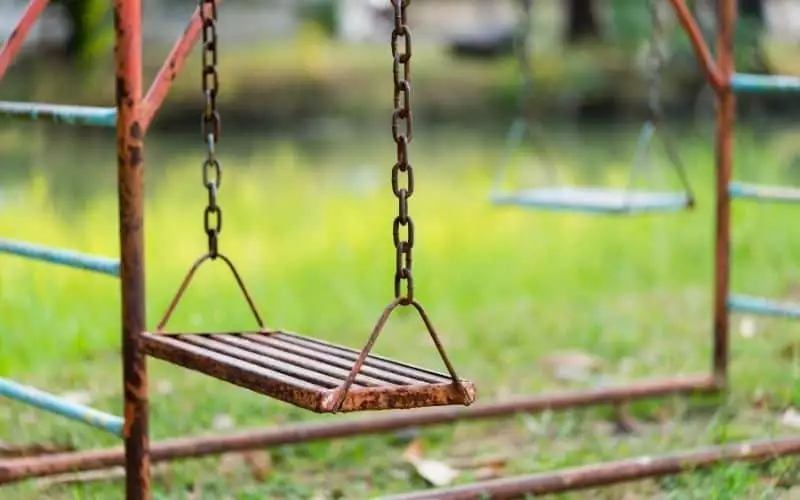
Chains and hardware are a different calculation. You can sand or dissolve light rust off them, but bolts, nuts, washers and chains are cheap and replacing them is faster than saving them. If you are replacing chains, get galvanized steel with a plastic or vinyl coating, which also keeps the links from pinching small fingers. Seat-and-chain sets like these Sunnyglade replacement swing seats are sold as a pair with the hooks included, which is usually simpler than sourcing chain and seats separately. I haven’t used that particular one; it is here because coated chain and a snap-hook fitting are what you want in a replacement.
When to give up on it
Some sets are past saving, and it is better to admit that than to keep painting over the problem.
If the hardware has rusted solid in place, the corrosion has almost certainly reached the frame, and swapping bolts won’t help unless you strip the frame too. If rust covers the whole set rather than sitting in a few spots, the labour stops being worth it, and grinding deep corrosion off can leave you with very little metal. The clear line is a hole: if rust has eaten through the tubing anywhere, the structure is compromised and the set needs to go.
An old frame doesn’t have to go to the dump, though. There are plenty of second lives for a retired swing set, and if you are clearing the spot for a replacement, it is worth reading how to prepare the yard for the new one and what to put down underneath it while the ground is already bare.