In this article
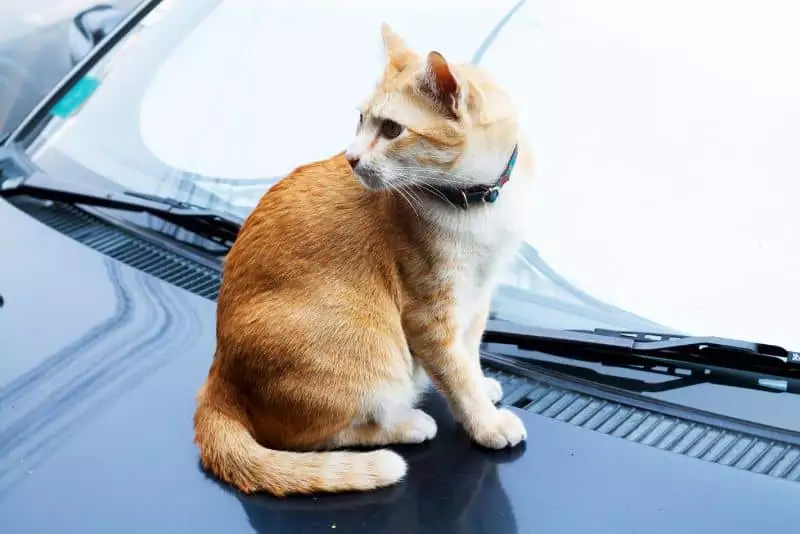
The only two things that keep cats off a car every single night are a garage and a car cover. Everything else is a deterrent, and deterrents work on some cats and not others. If you cannot park inside and do not want to throw a cover on every evening, your best odds come from a motion-activated sprinkler or an ultrasonic repeller aimed at the approach to the car, backed up by smells cats dislike sprinkled on the ground around the tires.
Below are thirteen options, roughly in order of how reliably they work. None of them hurt the cat.
The two fixes that always work
Park in the garage
Obvious, and skipped by almost everyone, usually because the garage is full of stuff. Four walls beat every repellent on this list. If clearing a weekend of junk buys you a scratch-free hood for the next ten years, it is a good trade.
Use a car cover
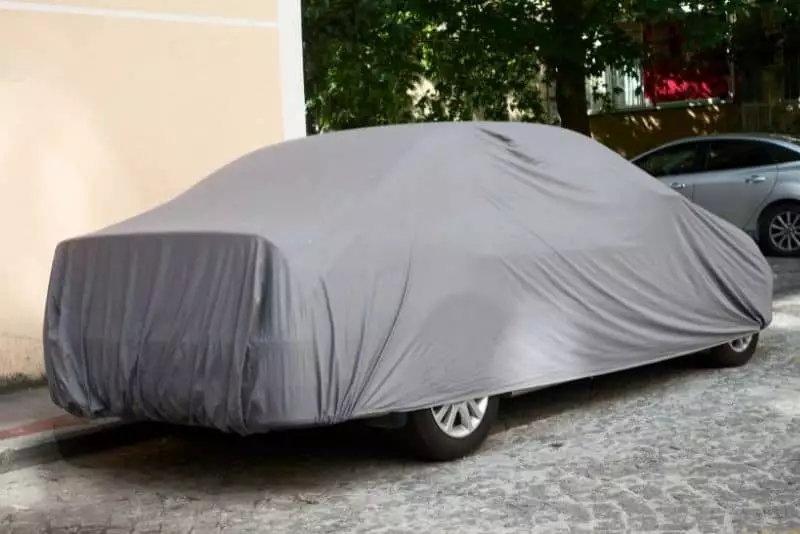
No garage, no problem. A cover lets the cats jump wherever they like without touching your paint. People groan at the idea of putting one on every night, but it is about five minutes a day once you have the routine. Get one that fits properly. A loose cover flaps in the wind and drags grit across the paint, which is the exact problem you were trying to solve.
Smells and textures cats avoid
These are the cheap experiments. Some cats bolt from a whiff of vinegar and some walk straight through it, so treat them as things to try rather than things that will work.
One rule applies to all of them: keep the stuff off your paint. Vinegar is acidic, citrus and pepper repellents are harsh, and essential oils can haze a clear coat. Put them on the ground around the car and on the tires instead.
Homemade sprays
Apple cider vinegar cut with an equal part of water is the usual starting point, mostly because a bottle is already in the pantry. Minty mouthwash mixed the same way is the other common one. Spray a ring on the pavement around the car in the evening and redo it after rain.
Herbs cats hate
Cats have far more sensitive noses than we do, and a few plants send most of them the other way:
- Mint
- Rosemary
- Lemon balm
- Lavender
- Blackthorn
- Holly
- Rue
- Citronella
Bundle them and set them around the car. The smell fades after a few days to a week, so you will be replacing them. Take them off the car itself in the morning unless you want a trail of rosemary down the street on your commute. The same herbs show up in most humane cat-deterrent advice, including the methods in keeping cats from pooping in your yard.
Carpet protectors, spikes up
This one is underrated. A plastic carpet runner has dull gripper spikes on the underside to hold it to the carpet. Flip it over on your hood or roof and those spikes face up. A cat jumps, lands on something unpleasant but harmless, and leaves. Do that for a week or two and most cats stop trying.
If you have a leftover strip in a closet, use that. If not, they cost very little.

Aluminum foil
Cats are strange about foil. Most of them will not walk on it. The catch is that it is a hassle: you have to lay it out and pull it off daily, and it blows away. Foil is worth a shot in one specific case, which is when the cat is only on the hood because the engine is warm. A couple of strips over the warm spot may be enough.
Commercial repellent sprays
There are plenty of these and they are hit or miss. I have not used any of them myself. If you want to try one, Nature’s Mace concentrate is the one that comes up most often for outdoor use, though the reviews are mixed enough that I would not expect miracles. It goes on the ground and the tires, not the bodywork.

Set-and-forget deterrents
If you would rather not do anything every evening, these two run on their own. They are also the options most likely to work on a determined stray.
Ultrasonic repellers
Several companies make motion-activated ultrasonic units. Reviews suggest only some are worth buying. The Broox solar animal repellent is the one with the best feedback: a motion sensor triggers a tone above human hearing plus a flashing light, and it runs on a small solar panel or a USB charge. I have not tested it, and it is on this list because of its review record rather than my own experience.
The practical limitation is coverage. One unit sees one direction. If your car is reachable from two sides, you either place it very carefully or buy two.
Motion-activated sprinkler
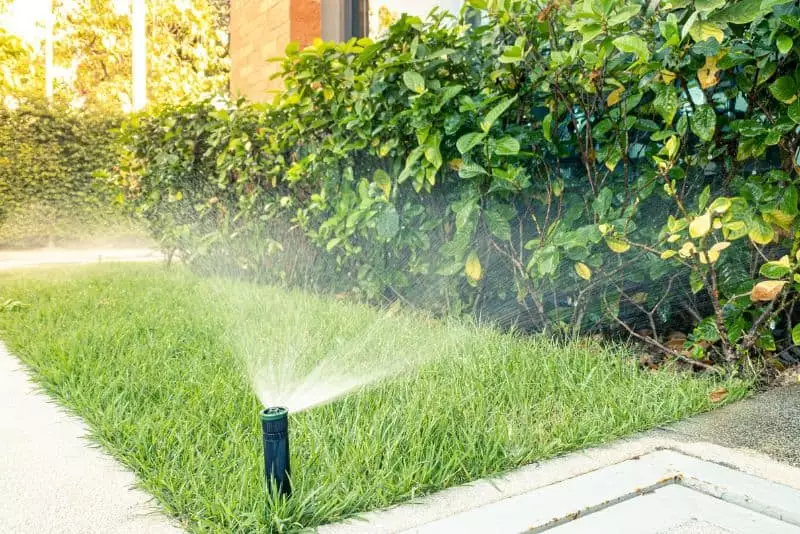
Cats hate getting wet, which is what makes this the most effective automatic option. The unit clicks loudly and fires a burst of water when something moves in front of it. The Hoont motion-activated sprinkler runs on AA batteries and screws onto a garden hose, so there is no wiring.
Aim it at the approach, not at the car, unless you enjoy water spots. And remember it is there. Walking out to the bin at 10pm and getting hit in the shins is a rite of passage with these things.
Long shots worth trying
None of these are reliable. They can buy you a week or two while you sort out something better.
Fake snakes
A rubber snake on the hood works because the cat cannot see it from ground level. It jumps up, finds a snake, and leaves in a hurry. Cats work it out fast, so move the snake around or swap it for a different one every couple of nights.
Cardboard boxes
Cats are drawn to an empty box in a way that is honestly a bit unsettling. Put one or two near the car and the cat may take the box instead. The downside is that your driveway now has boxes in it, and after one rain they look terrible.
Give them somewhere better
If the cats are on your car for warmth or a lookout, take that away by offering something more appealing a few yards off: a sheltered bed, a scratching post, a catnip plant. This tends to work for a while rather than forever, but it is the friendliest option if you do not actually want the cats gone. The same logic is behind most of the advice on keeping stray cats off your porch.
If it is your own cat
Training only works if you catch the cat in the act, which means you have to be there. A spray bottle of water aimed at the cat as it jumps up does the job without hurting anything. Do it consistently for a couple of weeks and the association usually sticks. It will not transfer to the neighborhood strays, so if you have both problems you need both approaches.
What not to use
Mothballs and ammonia come up constantly in online advice about cats, and both are worth thinking twice about before you scatter them near a driveway where pets and kids walk. I looked at each one separately in do mothballs keep cats away and does ammonia keep cats away.
Questions people ask
What can I spray on my car to keep cats off?
Nothing, really. Spray the ground and the tires around the car instead. Vinegar, citrus and peppermint solutions all risk your paint or clear coat, and a repaint costs far more than a car cover.
Does noise deter cats from cars?
Yes. Sudden noise is what makes motion-activated devices work, and it is why a sprinkler with a loud click outperforms a silent one. Do not stand close to the cat when you make a noise yourself, since a panicked cat will scramble across the hood and that is exactly the scratch you were avoiding.
How do I stop a cat scratching my car?
Put a physical barrier between the claws and the paint. A fitted car cover is the only thing that does this reliably. Deterrents reduce how often cats get on the car, but one cat on one bad night is all it takes.
How do I keep cats away from the engine bay?
Cats climb into warm engine bays in cold weather, which is dangerous for them and expensive for you. Bang on the hood before starting the car on cold mornings. Then remove the reason they are there by parking in the garage or covering the car so the engine cools out of reach.